
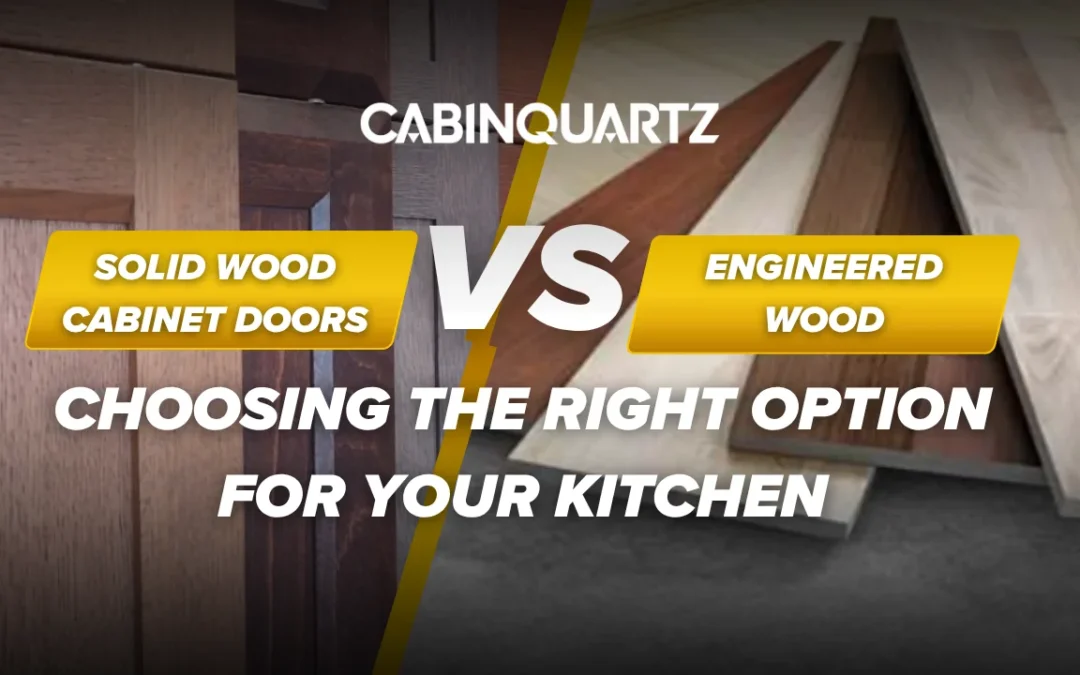
When planning a kitchen upgrade, one of the most common questions homeowners ask is:
“Should I choose solid wood kitchen cabinets or engineered wood?”
It’s a fair question and an important one.
Your kitchen cabinets are not just storage. They define your kitchen’s look, durability and even your home’s resale value. In Canada, where humidity and temperature change across seasons, choosing the right material matters even more.
In this guide by Cabinquartz, we’ll break down solid hardwood vs engineered wood in a clear, practical and easy-to-understand way so you can make the best decision for your home.
Which Cabinet Door Material Is Best?
If you need a fast, clear answer:
- Choose solid wood cabinet doors if you want natural beauty, long-term value and the ability to refinish.
- Choose engineered wood cabinet doors if you want a smooth painted finish, better price control and consistent performance.
- Choose a hybrid door if you want the best balance of both.
That’s the simple version. Now let’s break it down properly so you can make the right decision, not just a quick one.
Why This Decision Matters More Than You Think
Most homeowners focus heavily on kitchen countertops and appliances but cabinet doors take up the largest visual space in your kitchen.
They affect:
- How your kitchen looks every single day
- How it handles moisture, heat and wear
- How much maintenance you’ll deal with
- How well your investment holds up over time
In Canadian homes, this matters even more. Seasonal humidity swings from dry winters to humid summers can impact how materials expand, shrink or hold their shape.
So this isn’t just a design choice. It’s a performance decision.
Related Article: Can You Replace Kitchen Countertops Without Changing Cabinets in Canada?

What Are Solid Wood Cabinet Doors?
Solid wood cabinet doors are made from natural lumber such as maple, oak, cherry, walnut or birch.
Most are built using:
- Solid wood frames (rails and stiles)
- Either a solid or panelled centre section
Why Homeowners Choose Solid Wood
Solid wood offers something engineered materials can’t fully replicate:
- Natural grain variation
- Warmth and depth
- A premium, timeless look
- Strong resale appeal
It’s especially popular in:
- Traditional kitchens
- Shaker-style kitchens
- High-end custom homes
Real-world insight (from experience)
When clients see solid wood in person especially stained finishes they often say the same thing:
“It just feels more real.”
That emotional connection matters more than most people expect.
Related Article: 11 Popular Kitchen Cabinet Door Styles in Today’s Kitchens

What Are Engineered Wood Cabinet Doors?
Engineered wood cabinet doors are made from processed wood materials such as:
- MDF (medium-density fibreboard)
- Plywood
- HDF (high-density fibreboard)
- Particleboard cores with finishes
They’re often finished with:
- Paint
- Laminate
- Thermofoil
- Wood veneer
Why Engineered Wood Is Widely Used
Engineered materials are designed for consistency and stability.
They offer:
- Smoother surfaces (great for paint)
- Fewer natural imperfections
- Lower cost in many cases
- Predictable performance across large kitchens
Practical insight
If you want a crisp white kitchen with zero grain showing, engineered wood usually delivers a cleaner result than solid wood.
Solid Wood vs Engineered: Key Differences Explained
Durability and Climate Resistance
| Feature | Solid Wood Cabinet Doors | Engineered Wood Cabinet Doors |
|---|---|---|
| Appearance | Natural grain, rich texture | Smooth, uniform finish |
| Best for | Stained or natural finishes | Painted or modern finishes |
| Stability | Moves with humidity | More consistent structure |
| Cost | Higher | More budget-friendly |
| Repairability | Can be sanded/refinished | Limited repair options |
| Longevity | Excellent with care | Strong, depends on quality |
| Feel | Premium, authentic | Clean, controlled |
In Canadian climates, engineered wood often performs better in humidity control, while solid wood excels in long-term durability.
How Each Material Performs in a Real Kitchen
Durability in Everyday Use
Solid wood is strong but can dent or scratch depending on the species. Engineered wood can be very durable but once damaged, it’s often harder to repair cleanly.
Expert tip:
If you have kids, pets or a busy household:
- Solid wood = easier to repair
- Engineered wood = easier to maintain visually
Moisture, Humidity and Canadian Climate
This is where things get real.
Wood naturally expands and contracts with moisture. That’s normal.
In Canada:
- Winter = dry indoor air
- Summer = higher humidity
Solid wood:
- May expand and shrink slightly
- Joints can show minor lines over time
Engineered wood:
- More stable overall
- But vulnerable if water penetrates edges
Bottom line:
- Solid wood = natural movement
- Engineered wood = structural stability but edge sensitivity
Appearance and Visual Impact
This is where personal preference takes over.
Solid wood:
- Unique grain patterns
- Depth and warmth
- Slight variations = character
Engineered wood:
- Uniform look
- Cleaner lines
- Ideal for modern aesthetics
If you want your kitchen to feel:
- Warm and organic → solid wood
- Clean and modern → engineered wood
Pros and Cons of Solid Wood Kitchen Cabinets
Solid wood kitchen cabinets are often chosen for their timeless beauty, strength and long-term value. They bring natural warmth to a kitchen and can be repaired or refinished over time, which makes them attractive for homeowners planning to stay in their home for years.
Pros of Solid Wood Kitchen Cabinets
- Natural grain and rich visual character
- Strong and long-lasting material
- Easier to sand, repair and refinish
- Ideal for stained cabinet finishes
- Can add a more premium feel to the kitchen
Cons of Solid Wood Kitchen Cabinets
- Usually more expensive than engineered wood options
- Can dent or scratch depending on the wood species
- May expand and contract with humidity changes
- Requires proper care in busy or moisture-prone kitchens
Pros and Cons of Engineered Wood Cabinets
Engineered wood cabinets are a popular choice for modern kitchens because they offer a clean look, better dimensional stability and a more budget-friendly price point than many solid wood options. They work especially well in painted cabinet designs and in homes where consistency and low visible maintenance matter.
Pros of Engineered Wood Cabinets
- More affordable than many solid wood cabinet options
- More stable in changing humidity and temperature conditions
- Smooth surface that works well for painted finishes
- Clean, uniform appearance for modern kitchen styles
- Less likely to warp, twist or crack under normal indoor conditions
- Available in many finishes, styles and design options
Cons of Engineered Wood Cabinets
- Can be harder to repair once chipped, swollen or deeply damaged
- Water can cause serious damage if it enters exposed edges or seams
- Does not have the same natural grain depth as solid wood
- Lower-end engineered products may wear out faster
- May not offer the same premium feel or resale appeal as solid wood
- Cannot usually be sanded and refinished in the same way as solid wood
Best Solid Wood for Kitchen Cabinets in Canada
Choosing the best solid wood for kitchen cabinets depends on durability and style.
Popular Hardwood Choices
- Maple – Smooth, durable, very popular in Canada
- Oak – Strong with visible grain
- Cherry – Elegant and warm tones
- Birch – Budget-friendly alternative
- Walnut – Premium, dark finish
Cost vs. Long-Term Value
Solid Wood: Higher Upfront, Long-Term Value
Worth It If:
- This is your forever home
- You care about resale
- You want refinishing options
Engineered Wood: Smarter Short-To-Mid-Term Value
Best If:
- You’re budget-conscious
- You want a modern painted kitchen
- You’re renovating for ROI
Real-world truth: The “best value” is not the cheapest; it’s what fits your lifestyle.
Maintenance, Repairs and Lifespan
Solid wood
- can be repaired, sanded, refinished
- ages naturally over time
- requires basic care
Engineered wood
- low maintenance day-to-day
- harder to fix once damaged
- best when kept dry and sealed
If you want something that ages gracefully, go solid wood.
If you want something that stays consistent with minimal effort, go engineered.
Environmental Impact and Sustainability
- Solid wood → Natural but depends on sourcing
- Engineered wood → Uses recycled materials but includes adhesives
Look for FSC-certified materials for eco-friendly choices
Best Choice for Different Kitchen Styles
Choose Solid Wood For:
- Shaker kitchens
- Farmhouse style
- Classic or traditional designs
- Warm, natural interiors
Choose Engineered Wood For:
- Modern kitchens
- Flat-panel cabinets
- Minimalist designs
- High-gloss or matte painted finishes
Best Choice for Canadian Homes
In Canadian homes, both materials can perform well when used correctly and matched to the right application.
Solid wood tends to perform best when natural movement is expected and managed, while engineered wood is often preferred for painted finishes and more consistent performance in changing indoor conditions.
Pro insight:
Many high-quality kitchens today use solid wood frames with engineered centre panels. This approach helps reduce movement in key areas while maintaining a natural look and long-term durability.
When Hybrid Cabinet Doors Make the Most Sense
This is the smartest option most people overlook.
Hybrid Doors Combine:
- Solid wood where strength and appearance matter
- Engineered panels where stability matters
They Offer:
- Better durability
- Improved cost balance
- Reduced risk of warping
In real projects, this is often the best overall solution.
Common Mistakes to Avoid
- Choosing based only on showroom looks
- Assuming “solid wood” always means better
- Ignoring kitchen humidity and usage
- Picking paint on the wrong material
- Not asking about door construction
Always ask:
- What is the core material?
- How is it finished?
- How is it sealed?
Related Article: How to Clean Kitchen Cabinets Without Damaging the Finish: Simple Steps
Final Verdict: What Should You Choose?
Choosing between solid wood cabinet doors and engineered wood doesn’t have to be complicated.
The right choice comes down to how you use your kitchen, your design style and your long-term plans.
If you’re deciding, start with this simple framework:
- Choose your finish first (paint or stain)
- Then consider your budget
- Finally, think about your lifestyle and maintenance preferences
The best results come from matching the material to your needs — not just following trends.
For many Canadian homeowners, a hybrid approach often delivers the best balance of durability, stability and design.
If you’re still unsure, working with an experienced kitchen designer can help you avoid costly mistakes and choose materials that truly fit your space.
At Cabinquartz, we guide homeowners through these decisions with practical, real-world advice so your kitchen not only looks great, but performs well for years to come.
Important Questions About Kitchen Cabinet Materials
Can engineered wood cabinets look like solid wood?
Yes, high-quality engineered wood cabinets can look very similar to solid wood, especially with wood veneer or premium finishes. The main difference is that solid wood usually has more natural grain variation and depth.
Are solid wood cabinet doors better than engineered wood?
Not always. Solid wood cabinet doors are better for natural beauty and refinishing, while engineered wood is often better for painted finishes, consistency and moisture stability.
Do solid wood cabinets warp over time?
Solid wood cabinets can expand and contract slightly with humidity, especially in Canadian homes with dry winters and humid summers. Good construction and proper sealing help reduce the risk of major warping.
Is MDF good for cabinet doors?
Yes, MDF is a good option for cabinet doors, especially for painted kitchens. It offers a smooth, even surface that helps create a clean and modern finish.
Which lasts longer: solid wood or engineered wood cabinets?
Both can last for many years when they are well made and properly maintained. Solid wood has the advantage of being easier to repair and refinish, while engineered wood offers strong day-to-day stability.
Which is better for a busy family kitchen?
That depends on your priorities. Solid wood is easier to repair, while engineered wood is often easier to maintain visually in a busy household.
Is engineered wood cheaper than solid wood cabinets?
Yes, engineered wood cabinets are usually more affordable than solid wood cabinets. They are a practical option for homeowners who want a stylish kitchen while staying within budget.
What is better for Canadian weather: solid wood or engineered wood?
Engineered wood is often more stable in changing humidity, while solid wood naturally expands and contracts. Both perform well when properly installed and maintained.
Recent Blogs

Do You Need a Permit for a Bathroom Renovation in Oakville?
You have picked the tile. You have chosen a bathroom vanity. You know exactly what you want your Oakville bathroom to look like. Then someone says the word "permit" and the whole project suddenly feels like it just got a lot more complicated. It hasn't. Not even...
What is the Best Bathroom Floor Material?
A bathroom floor looks simple until water, grout stains, slippery tiles, cold mornings and long-term wear become daily problems. Pick the wrong material and repairs can cost more than the floor itself. The right choice solves moisture, safety, comfort, cleaning and...

Bathroom Remodel Mistakes: Do’s and Don’ts Homeowners Must Know
Bathroom renovations can add comfort, function and real value to your home but only when they’re done properly. Over the years, many homeowners in Oakville have dealt with leaking showers, poor ventilation, loose tiles, hidden mould and expensive repairs caused by...