
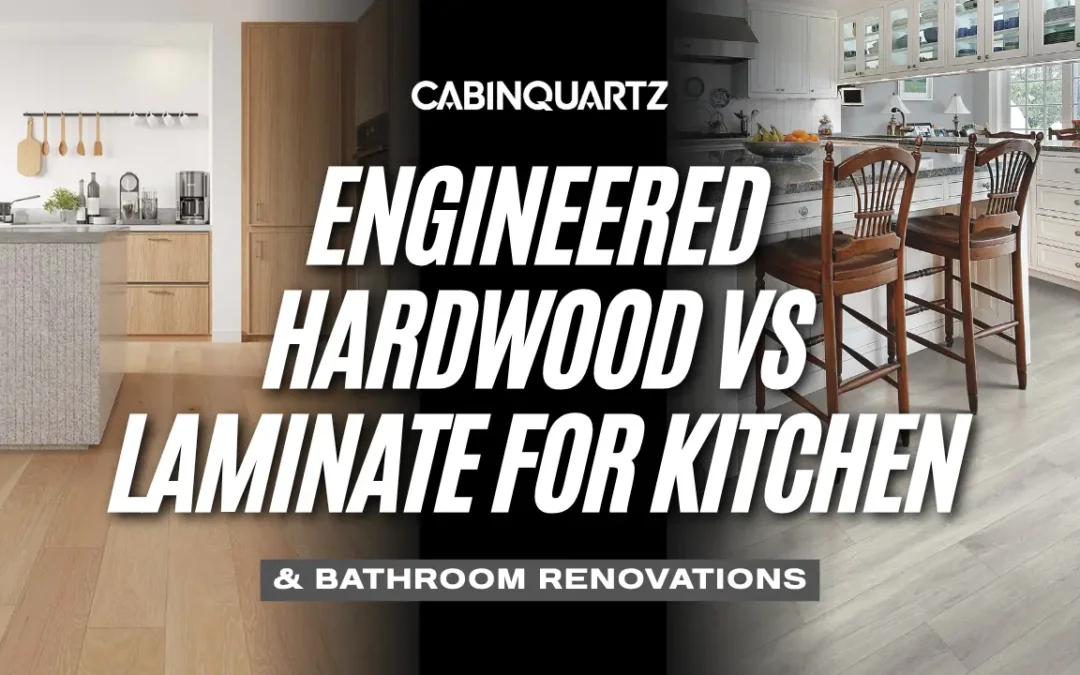
When you are planning a kitchen or bathroom renovation, flooring is not just a design choice. It affects comfort, cleaning, moisture protection, durability, resale value and how the finished space feels every day.
Many homeowners compare engineered hardwood vs laminate because both can create a warm wood-look finish without using traditional solid hardwood. But kitchens and bathrooms are not ordinary rooms. They deal with spills, humidity, steam, foot traffic, cleaning products and water around sinks, dishwashers, tubs, showers and vanities.
For homeowners in Oakville, Ontario, the right flooring should match your lifestyle, renovation budget, home design and moisture needs. At Cabinquartz, we focus on kitchen and bathroom renovations, so this guide looks at engineered hardwood versus laminate from a practical renovation point of view.
Quick Answer: Engineered Hardwood vs Laminate
Engineered hardwood is made with a real hardwood surface layer over a stable core. It gives a more natural, premium look and can work well in many kitchen renovation projects when moisture is controlled.
Laminate flooring is a synthetic flooring product that uses a printed wood-look layer with a protective wear surface. It is usually more affordable, scratch-resistant and easy to maintain, but not every laminate product is suitable for wet areas.
For kitchens, both engineered hardwood and laminate can be good options depending on your budget, design goals and daily use.
For bathrooms, moisture resistance should be the top priority. Standard engineered hardwood and standard laminate are usually not ideal for full bathrooms with heavy humidity or standing water. In many bathroom renovations, waterproof flooring such as tile or luxury vinyl may be a safer choice.
What is Engineered Hardwood Flooring?
To understand the engineered hardwood versus laminate debate, we must look beneath the surface. Engineered hardwood flooring is a high-performance product made of a real timber veneer (called the wear layer) bonded over a structural core of cross-layered plywood or high-density fibreboard (HDF).
Why Oakville Homeowners Prefer It:
- Genuine Aesthetics: Because the top layer is real Oak, Maple, or Walnut, it offers the natural grain and texture that imitation hardwood flooring can’t perfectly replicate.
- Structural Stability: The layered construction makes it much less likely to warp or “cup” than solid hardwood when exposed to humidity changes.
- Refinishing Potential: High-quality planks with a thick wear layer can often be sanded and refinished, extending the floor’s life for decades.
What is Laminate Flooring?
Many people ask, “what is laminate flooring made of?” Unlike engineered wood, laminate is a completely synthetic composite. It uses a high-resolution photographic layer to mimic wood, protected by a hard transparent wear layer, all sitting on a dense fibreboard core.
While it was once seen as a cheap alternative, modern laminate wood flooring vs engineered hardwood comparisons show that premium laminate has come a long way in both durability and realism.
Head-to-Head: Engineered Wood Flooring vs Laminate
| Feature | Engineered Hardwood | Laminate Flooring |
|---|---|---|
| Surface | Real hardwood veneer | Printed or digital wood-look image |
| Composition | Real wood veneer with plywood or HDF core | Wear layer, digital image layer and HDF core |
| Appearance | Natural, premium and authentic wood look | Realistic wood-look finish, but not real hardwood |
| Cost | Usually higher | Usually more affordable |
| Scratch Resistance | Moderate to good, depending on finish | Usually strong, especially with a durable wear layer |
| Moisture Resistance | Better than solid hardwood, but not waterproof; suitable for kitchens with proper care | Depends on product; some are water-resistant or waterproof-rated |
| Kitchen Suitability | Good for kitchens with proper care, quick spill cleanup and moisture control | Good for kitchens when the right water-resistant product is selected |
| Bathroom Suitability | Usually not ideal for full bathrooms; may work better in powder rooms | Only suitable for bathrooms if specifically designed for wet areas |
| Lifespan | Can last around 25–50 years with proper care and product quality | Can last around 15–25 years depending on quality, wear layer and maintenance |
| Maintenance & Cleaning | Needs gentle cleaning with wood-safe cleaners; avoid excess water | Easy to clean with sweeping, vacuuming and a damp mop |
| Resale Appeal | Higher-end appeal and may support home value | Practical value, but usually lower resale appeal than real wood |
| Best For | Premium kitchens, open-concept designs and homeowners who want a natural wood finish | Budget-friendly renovations, busy family kitchens, rental units and scratch-resistant flooring needs |
Engineered Hardwood vs Laminate for Kitchen Renovations
The kitchen is where style and function meet. It is also one of the most important rooms for home value. When comparing engineered hardwood vs laminate for a kitchen renovation, think about how the floor will work with your cabinets, countertops, island, backsplash, lighting and daily routine.
Engineered Hardwood For Kitchens
Engineered hardwood can be a beautiful choice for kitchens, especially when you want a warm, natural, upscale look. It pairs well with quartz countertops, custom cabinetry, modern backsplashes and open-concept layouts.
It may be a good fit if:
- You want a premium renovation finish
- Your kitchen connects to a living or dining space
- You want natural wood grain
- You clean spills quickly
- You want a more timeless look
- You are renovating for long-term enjoyment and resale value
However, engineered hardwood is not maintenance-free. Water should not sit on the floor and extra care is needed around dishwashers, sinks and exterior doors.
Laminate Flooring For Kitchens
Laminate flooring can also work well in kitchens, especially for homeowners who want a durable and cost-conscious option.
It may be a good fit if:
- You want a lower-cost alternative to real wood
- Your home has kids or pets
- You want strong scratch resistance
- You prefer easy cleaning
- You want a wood-look design without premium wood pricing
- You choose a water-resistant or waterproof laminate product
In many Oakville homes, laminate can be a practical option for rental units, busy family kitchens, basement kitchens or budget-friendly renovation projects.
Engineered Hardwood vs Laminate for Bathroom Renovations
Bathrooms need a different level of caution. While a wood-look floor can make a bathroom feel warm and modern, moisture should always come first.
This is where engineered flooring versus laminate becomes more complicated.
Can Engineered Hardwood Work In Bathrooms?
Engineered hardwood may work in some powder rooms where there is no shower or bathtub. A powder room usually has less humidity and less water exposure than a full bathroom.
However, engineered hardwood is usually not the best choice for full bathrooms because:
- Steam can affect wood-based materials
- Water can enter seams
- Leaks may cause swelling or staining
- Standing water can damage the surface or core
- Manufacturer warranties may not cover wet-room use
Can Laminate Work In Bathrooms?
Laminate may work only if it is specifically designed for wet areas. Standard laminate flooring is not usually recommended for bathrooms because moisture can enter the seams and cause the core to swell.
For full bathroom renovations, waterproof flooring such as tile or luxury vinyl is often a safer and longer-lasting option.
At Cabinquartz, bathroom flooring is considered as part of the full renovation plan, including ventilation, vanity placement, shower design, waterproofing and plumbing layout.
High-quality laminate has improved a lot. Some products look very close to real wood, but when compared side by side, engineered hardwood still feels more authentic.
Is Engineered Hardwood Waterproof?
No, most engineered hardwood is not waterproof. This is one of the most important points for kitchen and bathroom renovations. While engineered hardwood can be more stable than solid hardwood, it is still made with real wood and wood-based layers.
It may handle small spills if cleaned quickly, but it should not be exposed to:
- Standing water
- Ongoing leaks
- Steam-heavy rooms
- Wet towels
- Poor bathroom ventilation
- Frequent soaking or wet mopping
If you are asking, “Is engineered hardwood waterproof?” The safest answer is: it may be moisture-resistant depending on the product, but it is not the same as waterproof flooring.
What Homeowners Should Know Before Renovation
During a kitchen or bathroom renovation, installation should not be treated as a simple DIY decision. Flooring must be planned around the whole room.
Before installation, a renovation professional should review:
- Subfloor condition
- Moisture levels
- Cabinet layout
- Island placement
- Vanity placement
- Door transitions
- Baseboards and trim
- Appliance locations
- Plumbing areas
- Expansion gaps
- Product warranty requirements
In kitchens, flooring must work around heavy appliances, cabinet bases and traffic zones. In bathrooms, flooring must work with waterproofing, toilets, vanities, showers and tubs.
Poor installation can lead to gaps, lifting, swelling, uneven transitions and moisture issues.
Cleaning and Maintenance
Flooring should match your lifestyle. A floor that looks beautiful but is hard to maintain may not be the best choice for a busy home.
How To Clean Engineered Hardwood Floors
If you are wondering how to clean engineered hardwood floors or how to wash engineered hardwood floors, the key is to use gentle cleaning methods.
Best practices include:
- Sweep or vacuum regularly
- Use a slightly damp mop
- Clean spills quickly
- Use a wood-safe cleaner
- Avoid steam mops
- Avoid soaking the floor
- Use mats near sinks and entry points
How To Clean Laminate Flooring
Laminate is generally easy to clean. Regular sweeping and a damp mop are usually enough.
Best practices include:
- Remove dust and grit often
- Wipe spills right away
- Use manufacturer-approved cleaner
- Avoid excessive water
- Avoid abrasive pads
- Protect seams from moisture
For kitchens and bathrooms, the main rule is simple: never allow water to sit on any wood-based flooring unless the product is specifically designed for wet areas.
Final Verdict: What Does Cabinquartz Recommend?
The best choice between engineered hardwood vs laminate depends on where it is being installed.
For kitchens, engineered hardwood is a strong option if you want a premium, warm, natural look. Laminate flooring is a strong option if you want affordability, scratch resistance and easier maintenance.
For bathrooms, both options require caution. Moisture, steam, leaks and standing water can damage wood-based flooring. In many bathroom renovation projects, waterproof flooring is the safer and smarter choice.
Related Article: Cost Of A Bathroom Renovation In Oakville, Ontario (2026)
At Cabinquartz, we help homeowners in Oakville, Ontario make renovation decisions that balance style, function, budget and long-term performance. Your flooring should not be chosen separately from your countertops, cabinets, backsplash, vanity, lighting and layout. It should support the whole renovation.
Related Article You May Also Like:
- Kitchen Cabinet vs Bathroom Vanity: What’s the Difference in Oakville?
- What Is the Difference Between Quartz and Quartzite? A Simple Guide for Oakville Homeowners
- Granite vs Quartz Countertops: Which Kitchen Countertop Is Better?
- How to Clean Kitchen Cabinets Without Damaging the Finish: Simple Steps
FAQs About Engineered Hardwood vs Laminate
What is the main difference between engineered hardwood and laminate?
Engineered hardwood has a real wood top layer, while laminate has a printed wood-look surface. Engineered hardwood looks more natural and premium. Laminate is usually more affordable, scratch-resistant and easier to maintain.
Is engineered hardwood better than laminate for kitchens?
Engineered hardwood is better if you want a premium, natural wood look. Laminate is better if you want a budget-friendly, scratch-resistant and easy-clean option. At Cabinquartz, we recommend choosing based on moisture, traffic, design and lifestyle.
Is laminate flooring good for bathroom renovations?
Laminate can work in bathrooms only if it is water-resistant or waterproof-rated. Standard laminate is not ideal for full bathrooms because water can enter the seams and cause swelling. Waterproof flooring is usually safer for bathrooms.
Which lasts longer, engineered hardwood or laminate?
High-quality engineered hardwood can last longer with proper care and moisture control. Laminate can also last many years, especially in busy homes, but it usually cannot be refinished like some engineered hardwood products.
Can engineered hardwood be installed in a bathroom?
Engineered hardwood may work in some powder rooms, but it is usually not ideal for full bathrooms. Steam, splashes and standing water can damage wood-based flooring. Cabinquartz often recommends waterproof flooring for full bathroom renovations.
What flooring is best for kitchen and bathroom renovations in Oakville?
For kitchens, engineered hardwood, laminate, tile or waterproof vinyl may work depending on your needs. For bathrooms, waterproof flooring such as tile or luxury vinyl is usually best. Cabinquartz can help Oakville homeowners choose flooring that fits the full renovation plan.
Is engineered hardwood waterproof?
No, most engineered hardwood is not fully waterproof. It can handle small spills if cleaned quickly, but standing water, leaks and high humidity can damage it over time.
Which is more affordable: engineered hardwood or laminate?
Laminate is usually more affordable than engineered hardwood. Engineered hardwood often costs more because it has a real wood surface and a premium look, while laminate offers a wood-style finish at a lower cost.
Is engineered hardwood or laminate better for homes with kids and pets?
Laminate is often better for kids and pets because it is usually more scratch-resistant and easier to clean. Engineered hardwood can still work, but it needs more care to avoid scratches, dents and moisture damage.
Recent Blogs

Do You Need a Permit for a Bathroom Renovation in Oakville?
You have picked the tile. You have chosen a bathroom vanity. You know exactly what you want your Oakville bathroom to look like. Then someone says the word "permit" and the whole project suddenly feels like it just got a lot more complicated. It hasn't. Not even...
What is the Best Bathroom Floor Material?
A bathroom floor looks simple until water, grout stains, slippery tiles, cold mornings and long-term wear become daily problems. Pick the wrong material and repairs can cost more than the floor itself. The right choice solves moisture, safety, comfort, cleaning and...

Bathroom Remodel Mistakes: Do’s and Don’ts Homeowners Must Know
Bathroom renovations can add comfort, function and real value to your home but only when they’re done properly. Over the years, many homeowners in Oakville have dealt with leaking showers, poor ventilation, loose tiles, hidden mould and expensive repairs caused by...