

If you’re planning a kitchen renovation in Oakville, understanding the types of kitchen layouts to inspire your space is the most important first step; not cabinetry, not countertops, not even colours.
Why?
Because layout controls everything:
- how your kitchen functions
- how people move
- how storage works
- how your home feels day to day
In Oakville, Ontario, homeowners are increasingly looking for smart, efficient, and modern kitchen layouts that work for both compact and spacious homes. At Cabinquartz, we’ve worked with homeowners who initially focused on finishes, only to realize later that layout decisions had a far greater impact on their everyday living experience.
That’s exactly why this guide goes deeper.
Instead of just showing inspiration, it helps you understand what actually works in real homes. Inside, you’ll find:
All kitchen layout types
- Real-life use cases
- Workflow and ergonomics
- Local renovation considerations
- Cost and value insights
Why Choosing the Right Kitchen Layout Matters
A good kitchen layout directly impacts your daily life.
Think about it:
- Can you move easily between cooking zones?
- Is there enough counter space?
- Does it feel open or cramped?
These are exactly the questions your layout answers.
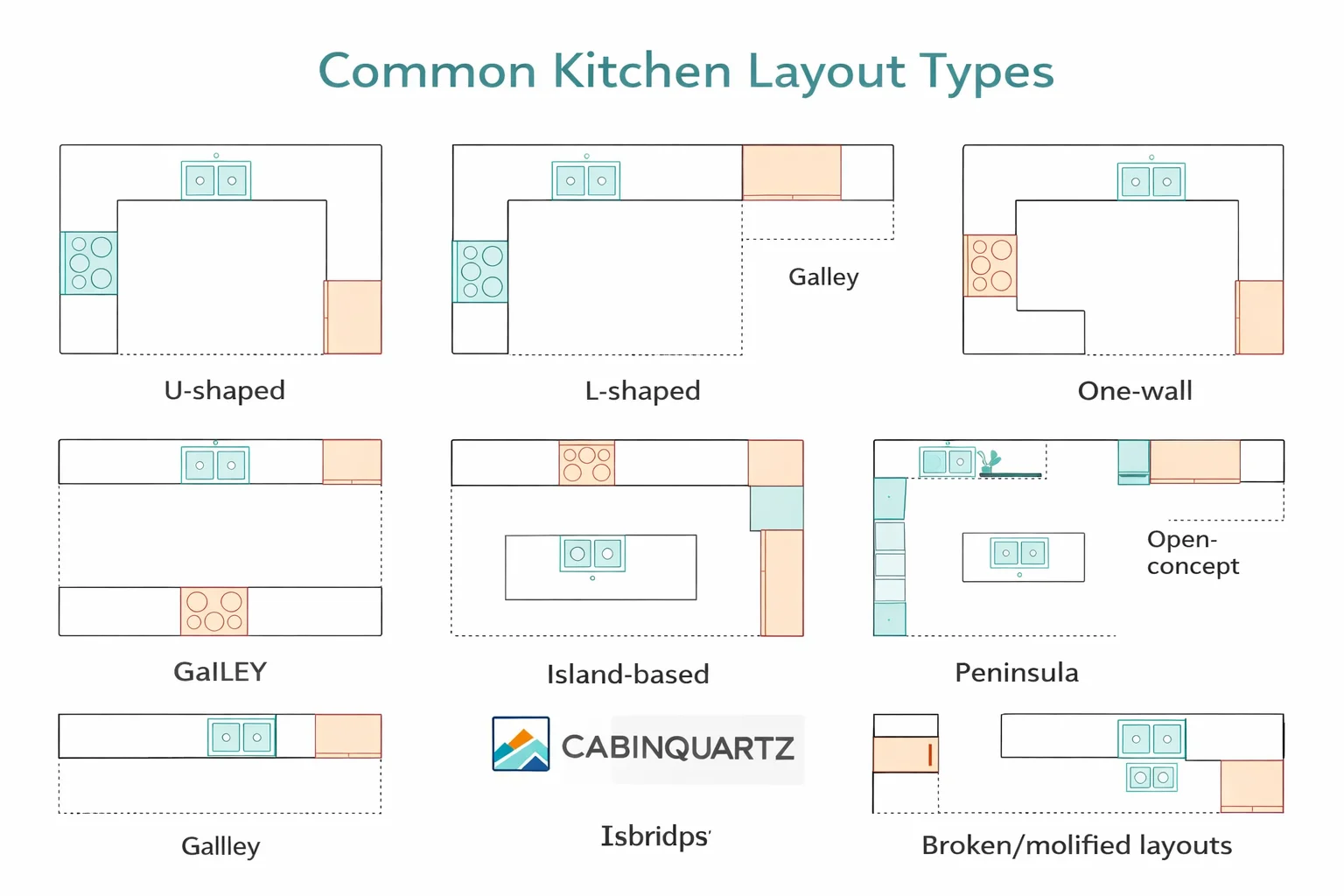
Common Types of Kitchen Layouts
Here are the core layouts used in modern homes:
- U-shaped
- L-shaped
- Galley
- One-wall
- G-shaped
- Island-based
- Peninsula
- Open-concept
- Broken/modified layouts
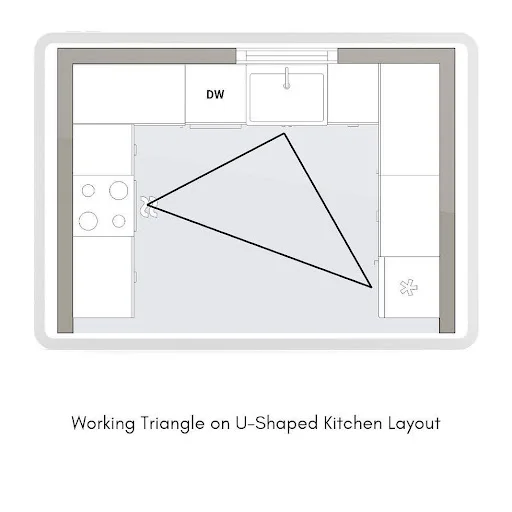
U-Shaped Kitchen Layout
What it is
A U-shaped kitchen layout features three connected walls of cabinets and appliances, forming a “U” shape. This design is one of the most efficient types of kitchen layouts, offering excellent workflow and maximum use of space.
Best for
- Large kitchens
- Families who cook often
- Storage-heavy needs
Pros
- Provides maximum counter space for prep and cooking
- Supports a strong and efficient kitchen work triangle
- Offers extensive storage with upper and lower cabinets
Cons
- Can feel enclosed
- Corner cabinets need planning
Expert design tips
Use pull-out corner systems (like lazy Susans or drawer organizers) to maximize storage efficiency. Maintain a walkway clearance of 42–48 inches (107–122 cm) for smooth movement, and incorporate layered lighting to prevent dark corners and enhance visibility.
L-shaped Kitchen Layout
What it is
A layout where cabinets and appliances are arranged along two adjoining walls, forming an “L” shape. This is one of the most versatile and widely used types of kitchen layouts.
Best for
- Open-concept homes
- Flexible kitchen configurations
- Small to medium-sized spaces
Pros
- Creates an open, spacious feel
- Allows easy integration of a kitchen island
- Supports smooth traffic flow and movement
- Works well with the kitchen work triangle
Cons
- Corner storage challenges
Best Use Case in Oakville
Perfect for modern renovations where the kitchen connects to living/dining areas.
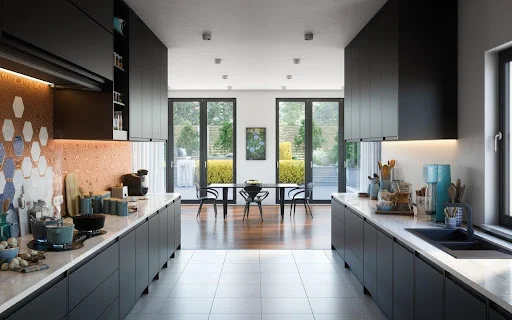
Galley Kitchen Layout
What it is
A layout featuring two parallel countertops with a walkway in between, creating a compact and highly functional cooking space. This is often considered one of the most efficient types of kitchen layouts.
Best for
- Condos and apartments
- Small homes and narrow spaces
- Compact kitchen design for small space
Pros
- Highly efficient workflow (everything within easy reach)
- Cost-effective to design and install
- Maximizes available space in smaller kitchens
Cons
- Limited social space
Expert tip
Use bright lighting and reflective surfaces to reduce the narrow feel.
One-Wall Kitchen Layout
What it is
A streamlined layout where all cabinets, appliances and countertops are arranged along a single wall. This is one of the most space-saving types of kitchen layouts, often used in compact homes.
Best for
- Small spaces and compact homes
- Minimalist kitchen designs
- Open-concept living areas
Pros
- Maximizes floor space
- Simple and cost-effective installation
- Clean, modern, minimalist look
Cons
- Limited storage and counter space
- Less efficient workflow compared to multi-wall layouts
Expert tip
Go vertical with storage by using tall cabinets, wall-mounted shelves and built-in organizers.
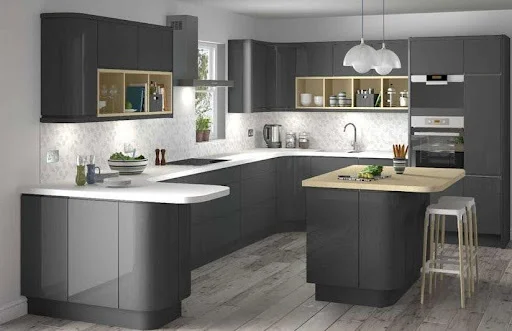
G-Shaped Kitchen Layout
What it is
A G-shaped kitchen layout is an extension of the U-shaped design, featuring three walls of cabinetry plus an additional peninsula or partial fourth wall. This layout offers one of the most functional and storage-rich types of kitchen layouts.
Best for
- Large kitchens
- Homes that require maximum functionality and storage
- Busy households with multiple cooks
Pros
- Provides extensive counter space and storage
- Creates defined work zones for cooking, prep and cleaning
- Offers additional seating with a built-in peninsula
Cons
- Can feel enclosed or crowded in smaller spaces
- May restrict movement if not designed properly
Expert tip
Use lighter cabinet colours and strategic lighting to prevent the space from feeling too heavy or closed in. Keep walkways clear to maintain smooth traffic flow and functionality.
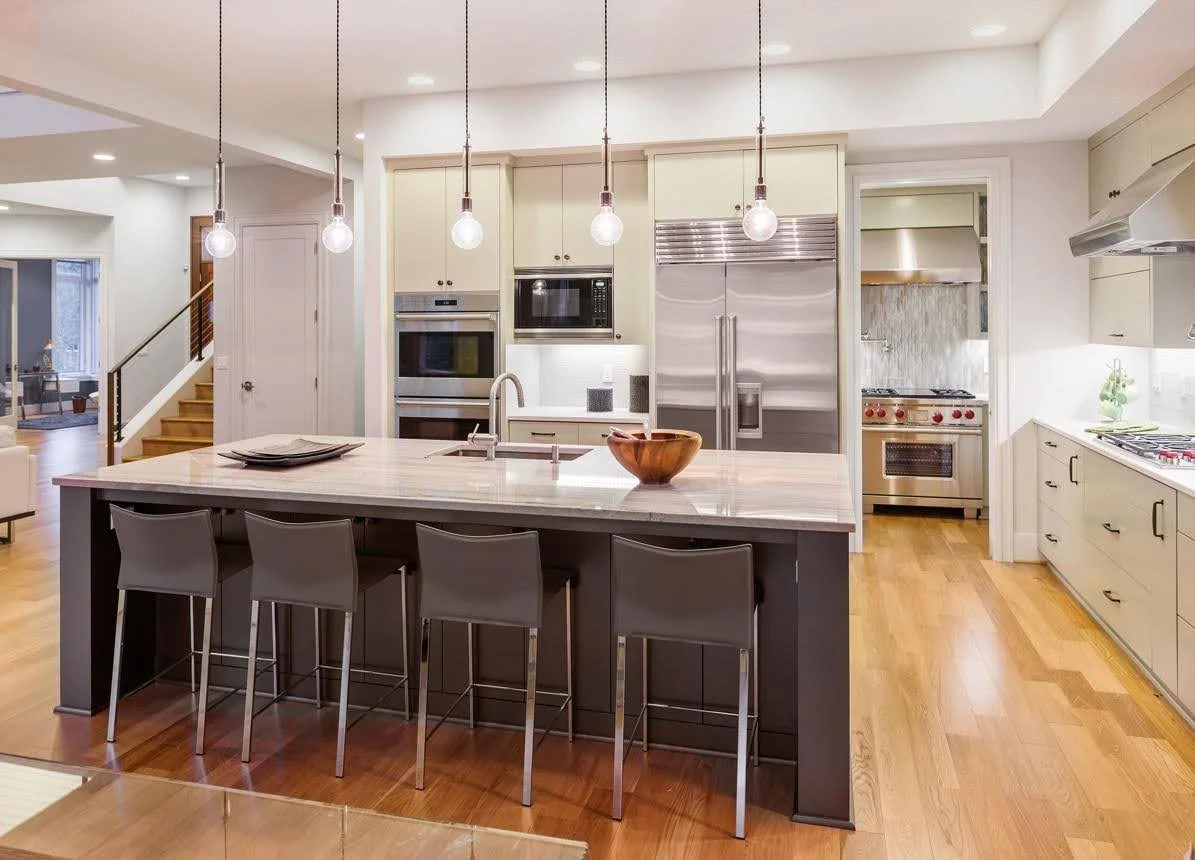
Island Kitchen Layout
What it is
An island kitchen layout includes a freestanding counter or workspace (island) placed in the centre of the kitchen. It can be combined with L-shaped, U-shaped or one-wall designs, making it one of the most flexible types of kitchen layouts.
Best for
- Social kitchens and family gatherings
- Entertaining guests
- Medium to large kitchen spaces
Pros
- Adds extra counter space for prep and cooking
- Creates a central hub for social interaction
- Provides additional storage and seating options
Cons
- Requires sufficient space for proper movement
- Can disrupt workflow if poorly positioned
Expert tip
Maintain proper clearance of at least 42 inches (about 107 cm) around the island to ensure smooth traffic flow and safe movement. This is especially important in busy households and open-concept kitchens.
Related Article: Types Of Kitchen Islands And How To Choose The Right Kitchen Island
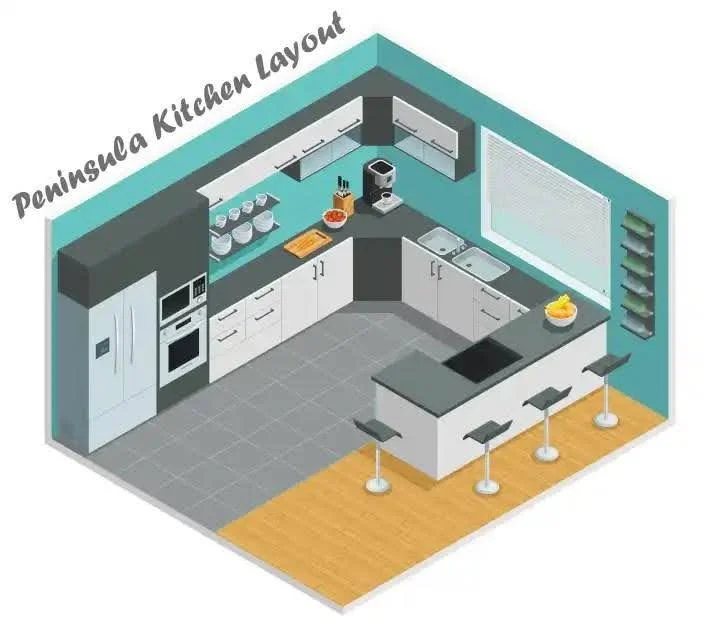
Peninsula Kitchen Layout
What it is
A peninsula kitchen layout features a connected extension of cabinetry or countertop that projects from a wall or main counter, creating a semi-enclosed workspace. It functions like an attached island and is a practical option among types of kitchen layouts for maximizing space.
Best for
- Medium-sized kitchens
- Homes that need extra counter space without a full island
- Open-concept layouts with limited room
Pros
- Adds additional workspace and storage
- Provides seating options for casual dining
- Helps define kitchen zones in open layouts
Cons
- Can restrict movement if space is tight
- Less flexible than a freestanding island
Expert tip
Use the peninsula as a multi-functional space combining prep area, seating and storage. Keep the surrounding layout open and uncluttered to maintain smooth traffic flow, especially in small to medium kitchen layouts.
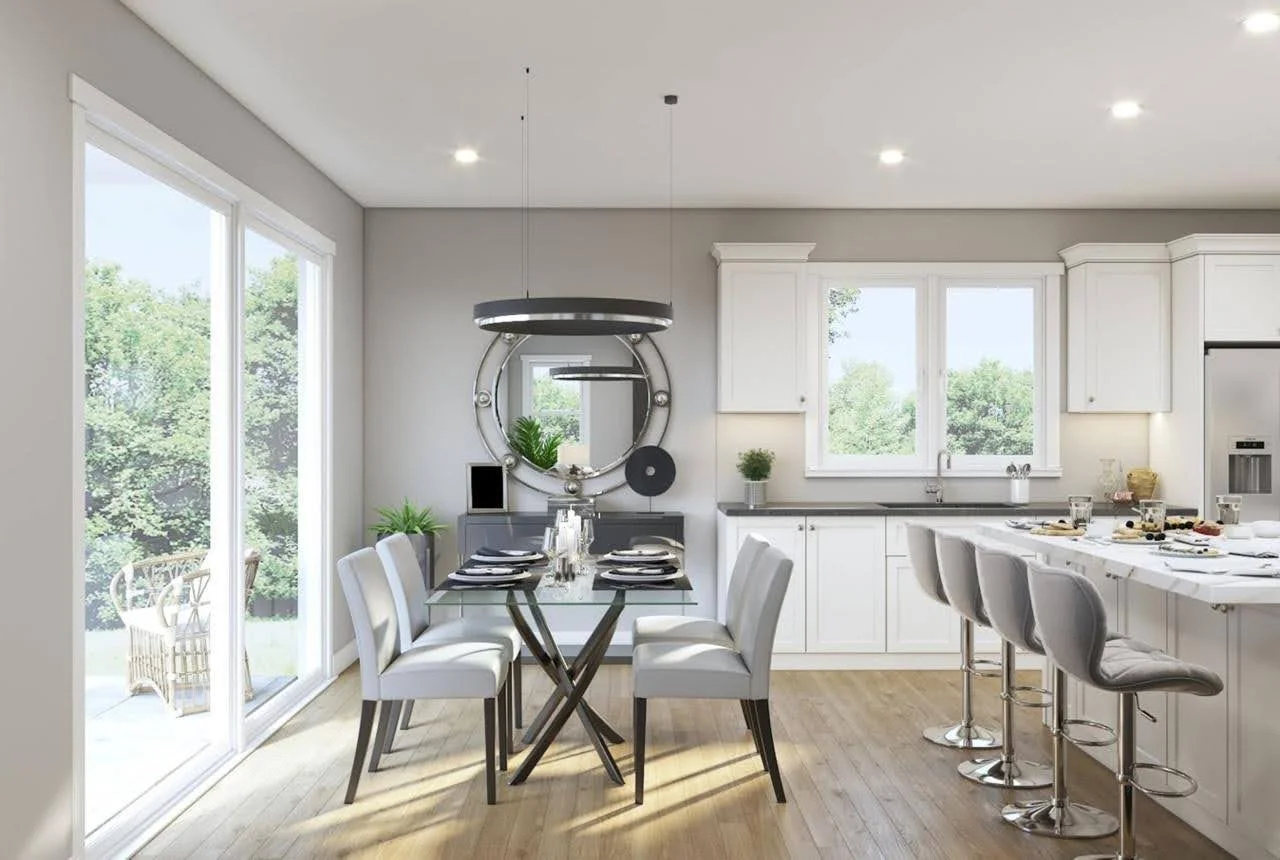
Open-Concept Kitchen Layout
What it is
An open-concept kitchen layout removes walls or barriers between the kitchen and adjacent living or dining areas, creating one seamless, connected space. It’s one of the most popular types of kitchen layouts in modern homes.
Best for
- Entertaining guests
- Family interaction and social living
- Modern open-plan homes
Pros
- Creates a spacious and airy feel
- Encourages interaction while cooking
- Allows natural light to flow throughout the space
Cons
- Less privacy and noise control
- Requires consistent design across connected areas
Expert tip
Use a kitchen island or peninsula to define zones within the open space. Maintain a cohesive colour palette and materials to create a unified look across the kitchen, dining and living areas.
Broken or Modified Layouts
What it is
A broken or modified kitchen layout is a customized version of standard layouts (like L-shaped or U-shaped), where intentional gaps or adjustments are made to accommodate architectural elements such as windows, doors or structural walls. These are highly adaptable types of kitchen layouts designed for real-world spaces.
Best for
- Homes with structural constraints
- Renovations with existing walls or openings
- Unique or irregular kitchen floor plans
Pros
- Allows flexibility around windows, doors, and structural features
- Improves natural light and ventilation
- Creates a more open and personalized kitchen design
Cons
- Requires careful planning to maintain workflow
- May reduce continuous counter or cabinet space
Expert tip
Work with a professional kitchen designer to optimize flow and functionality while adapting to structural limitations. Strategic placement of appliances and storage ensures your layout remains efficient, even with modifications.
Comparison Table of Kitchen Layouts
Here’s a quick comparison to help you decide faster:
| Layout Type | Best For | Space Size | Efficiency |
|---|---|---|---|
| One Wall | Small homes, minimalist designs | Compact | Medium |
| Galley | Narrow kitchens, condos | Small | High |
| L-Shaped | Open-concept homes | Medium | High |
| U-Shaped | Families, frequent cooking | Large | Very High |
| Island-Based | Entertaining, social kitchens | Large | Medium |
| Peninsula | Medium-sized kitchens | Medium | High |
| G-Shaped | Maximum storage and functionality | Large | Very High |
| Open-Concept | Entertaining, family interaction | Medium–Large | Medium |
| Broken/Modified | Custom renovations, unique layouts | Varies | Depends |
Best kitchen layouts based on specific needs
Best for families: L-shaped + island and U-shaped
Best for entertaining: Open-concept + island
Best for small homes: Galley and One-wall
Best for resale value: Open-concept with island
Why Kitchen Layout is The Foundation of A Great Kitchen
A kitchen layout is not just a shape—it’s a system.
The Kitchen Work Triangle
The most efficient kitchens are built around three key zones:
- Sink
- Stove
- Refrigerator
These should form a triangle that minimizes unnecessary movement.
Good layout = fewer steps + smoother workflow
Modern Kitchen Work Zones
Today’s kitchens go beyond the triangle:
- Prep zone
- Cooking zone
- Cleaning zone
- Storage zone
- Social/serving zone
A well-designed layout balances all of these, not just appliance placement.
How To Choose The Right Kitchen Layout
1. Match Layout To Home Type
In Oakville, housing varies widely:
- Detached homes: ideal for islands, U-shapes, open layouts
- Townhomes: best with L-shape or peninsula
- Condos: one-wall or galley
- Older homes: often require modified layouts
2. Consider Lifestyle And Usage
Ask practical questions:
- Do you cook daily or occasionally?
- Do kids or guests gather here?
- Do you need seating or just workspace?
3. Understand Renovation Constraints
Layout changes can involve:
- Plumbing relocation
- Electrical rewiring
- Structural wall removal
- Permits in Ontario
This directly affects cost and feasibility.
Related Article: How Long Can You Expect The Kitchen Renovation Process To Take?
Kitchen Layout Cost & Renovation Complexity (Canada)
Kitchen layout changes can impact renovation cost significantly. Here’s a general guide for Ontario homeowners:
| Layout | Cost Level | Complexity |
|---|---|---|
| One-wall | Low | Low |
| Galley | Low–Medium | Low |
| L-shape | Medium | Medium |
| U-shape | Medium–High | Medium |
| Island | High | Medium–High |
| Open-concept | High | High |
Common Kitchen Layout Mistakes to Avoid
Avoid these common mistakes when planning your kitchen layout:
- Oversized Islands
Too large islands restrict movement. Keep at least 42 inches (107 cm) clearance. - Poor Lighting
Single lighting creates dark areas. Use layered lighting (ceiling, under-cabinet, pendant). - Ignoring Workflow
Bad appliance placement slows you down. Follow the sink–stove–fridge triangle. - Blocking Walkways
Tight paths make kitchens uncomfortable. Maintain 36–48 inches (91–122 cm) clearance. - Poor Storage Planning
Lack of storage leads to clutter. Use pull-outs, vertical cabinets, and organizers.
Ready to Design a Kitchen That Actually Works for Your Lifestyle?
At Cabinquartz, we help you:
- Choose the best kitchen layouts
- Create efficient kitchen configuration ideas
- Design premium quartz countertops
- Plan smart kitchen floor layouts
Conclusion
Choosing the right types of kitchen layouts to inspire your space can completely transform how your kitchen looks, feels, and functions. Whether you’re exploring different types of kitchen layout options for a renovation or planning a new build, the key is finding the right balance between style, efficiency, and everyday comfort.
From compact small kitchen layouts to spacious island designs, there’s a solution tailored for every home in Oakville.
But choosing the right layout is about more than just design; it’s about how your space works for you every single day.
The best kitchen layout:
- Fits your available space
- Matches your lifestyle and cooking habits
- Supports long-term value and functionality
If you’re planning a kitchen upgrade in Oakville, working with experts like Cabinquartz ensures your layout is not only visually appealing but also practical, efficient, and built to last.
Frequently Asked Questions About Kitchen Layouts
What is the most popular kitchen layout in Oakville?
The most popular kitchen layout in Oakville is the L-shaped layout, often combined with an island. It offers flexibility, works well in open-concept homes and supports both cooking and entertaining. Many homeowners choose this layout for its balance of function and modern design.
Which kitchen layout adds the most value to a home?
Open-concept kitchen layouts typically add the most resale value because they create a spacious, connected living area. Buyers in Canada often prefer layouts that combine the kitchen, dining and living space for better flow and natural light.
What is the best kitchen layout for small spaces?
The best kitchen layouts for small spaces are galley and one-wall layouts. These designs maximize efficiency by keeping everything within reach while saving space. Adding vertical storage and compact appliances can further improve functionality in small kitchens.
Is open-concept kitchen design still popular in Canada?
Yes, open-concept kitchens remain very popular across Canada, especially in suburban areas like Oakville. They allow for better interaction, more natural light and a modern lifestyle where cooking and socializing happen in the same space.
Can you completely change your kitchen layout during a renovation?
Yes, you can change your kitchen layout completely, but it depends on structural walls, plumbing and electrical systems. Working with professionals like Cabinquartz helps ensure the new layout is both functional and feasible within your space.
How much does it cost to change a kitchen layout in Ontario?
The cost to change a kitchen layout in Ontario can vary widely, typically ranging from moderate to high depending on structural changes, plumbing relocation, and materials. A professional consultation with Cabinquartz can provide a more accurate estimate based on your specific needs.
How do I design a small kitchen layout effectively?
To design a small kitchen layout, focus on efficiency and smart storage. Use vertical cabinets, compact appliances, and simple layouts like galley or one-wall designs. Experts like Cabinquartz can help optimize space while maintaining style and functionality.
What is the most efficient kitchen layout for everyday use?
The most efficient kitchen layout is typically the galley or U-shaped layout because they support a strong work triangle between the sink, stove and refrigerator. This reduces movement and improves workflow, making daily cooking faster and easier.
Recent Blogs

Do You Need a Permit for a Bathroom Renovation in Oakville?
You have picked the tile. You have chosen a bathroom vanity. You know exactly what you want your Oakville bathroom to look like. Then someone says the word "permit" and the whole project suddenly feels like it just got a lot more complicated. It hasn't. Not even...

What is the Best Bathroom Floor Material?
A bathroom floor looks simple until water, grout stains, slippery tiles, cold mornings and long-term wear become daily problems. Pick the wrong material and repairs can cost more than the floor itself. The right choice solves moisture, safety, comfort, cleaning and...

Bathroom Remodel Mistakes: Do’s and Don’ts Homeowners Must Know
Bathroom renovations can add comfort, function and real value to your home but only when they’re done properly. Over the years, many homeowners in Oakville have dealt with leaking showers, poor ventilation, loose tiles, hidden mould and expensive repairs caused by...